Kinkajou Night Walk Monteverde: Reviews, Price and What You See
The minibus drops you off in the pitch black around 5:40 PM, right when the lingering sunset turns from bruised purple to absolute nothing. The wind up here in the Tilaran mountains usually has a bite to it. You stand on damp gravel, zip your rain jacket up to your chin, and wonder if dragging yourself out into the wet woods after a heavy plate of gallo pinto was actually a smart move. Booking a kinkajou night walk is one of those things everyone tells you to do in Santa Elena, largely because roughly eighty percent of Costa Rica's forest creatures only wake up when the daylight vanishes completely.
Most travelers arrive expecting a nature documentary. You picture animals parading down the path like a zoo corridor. The reality is far stranger, much quieter, and occasionally interrupted by six people whispering frantically over a brown ball of fur fifty feet up an avocado tree. This guide breaks down what actually happens on the trail, what your dollars pay for, what you are realistic about seeing, and whether this specific evening tour makes sense for your itinerary.
Book your monteverde night tour experience:
What is the Kinkajou Night Tour Monteverde Actually Like?
First, shake off the idea that you are hiking deep into the famous cloud forest reserve. You are not. The kinkajou night tour monteverde takes place in secondary forest patches on the lower, slightly warmer slopes around Monteverde. That is deliberate. Dense primary cloud forest high up along the continental divide is often windy, constantly drenched in sideways mist, and surprisingly barren for casual wildlife spotting at night. Animals prefer the edges. They like the fruit trees, lower elevations, and sheltered gullies found in these private reserves.
You meet your guide at a small wooden reception shelter, get handed a cheap LED flashlight, and get sorted into a group of about eight people. If you get stuck with a group of twelve, speak up and ask if they can split it. Big groups ruin night walks because you spend half your time staring at the backpack of the guy ahead of you instead of scanning the canopy.
Walking into the woods at night messes with your senses. The first ten minutes feel awkward. Your flashlight beam bounces off wet leaves, mossy tree trunks, and tangled lianas, creating a disorienting tunnel vision. You hear things long before you see them. Branches snap overhead. Tree frogs make chirping sounds like broken electronics. The air smells of wet dirt, rotting wood, and damp ferns.
Note: Flash photography is strictly forbidden on nearly every trail here. Turn your flash off before entering the forest, because accidentally blinding an owl or a sleepy coati will earn you an immediate lecture from the guide.
Your guide does the heavy lifting. Good guides do not just walk; they listen. They look for eye shine by holding their headlamps right at eye level, hunting for the faint amber or emerald glint bouncing back from the canopy. When they spot something, they set up a heavy-duty spotting scope on a tripod in three seconds flat, dial the focus, and invite everyone to take turns peeking through the lens.
Wildlife Sightings: What You Might Spot in the Dark
Nature never signs a contract. If anyone promises you will see a kinkajou, a two-toed sloth, and an orange-kneed tarantula all in one evening, they are lying. Still, because these secondary forest trails have established fruit trees, your odds on the kinkajou night walk monteverde costa rica are unusually decent.
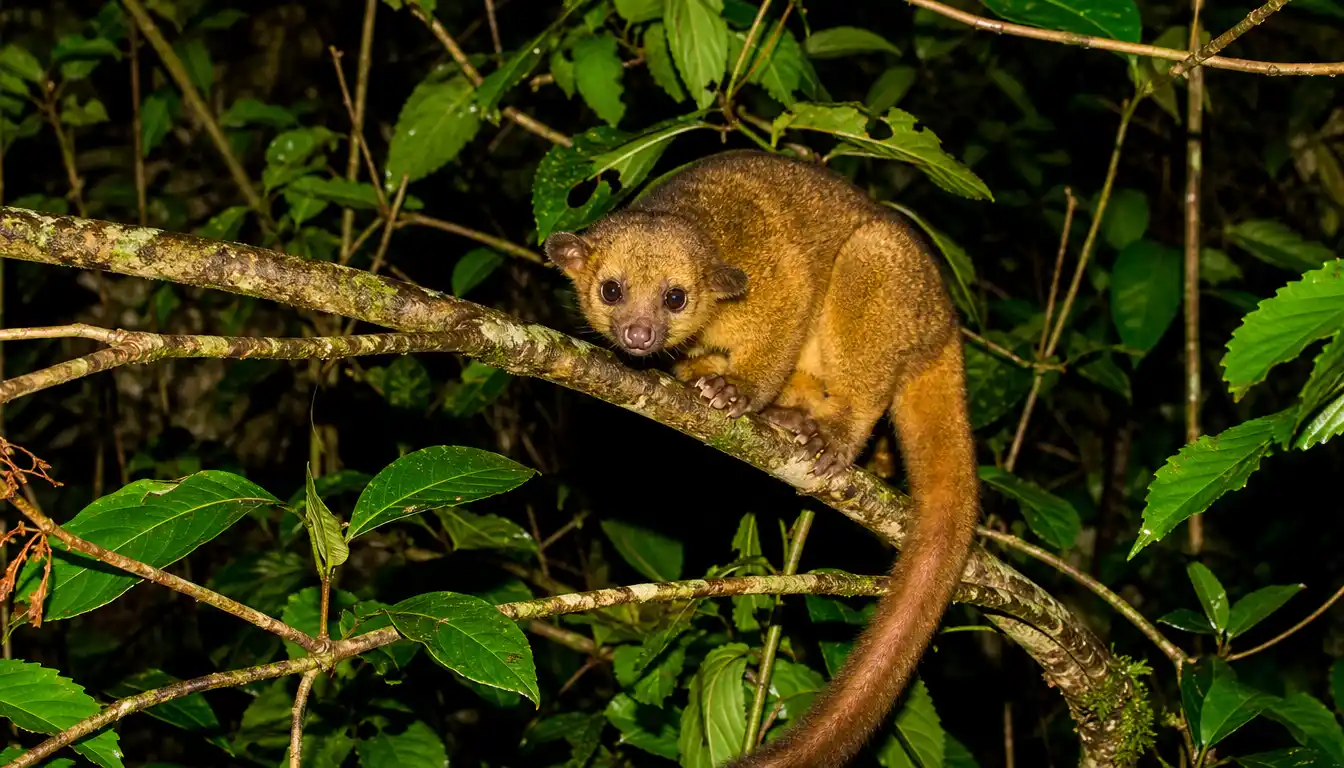
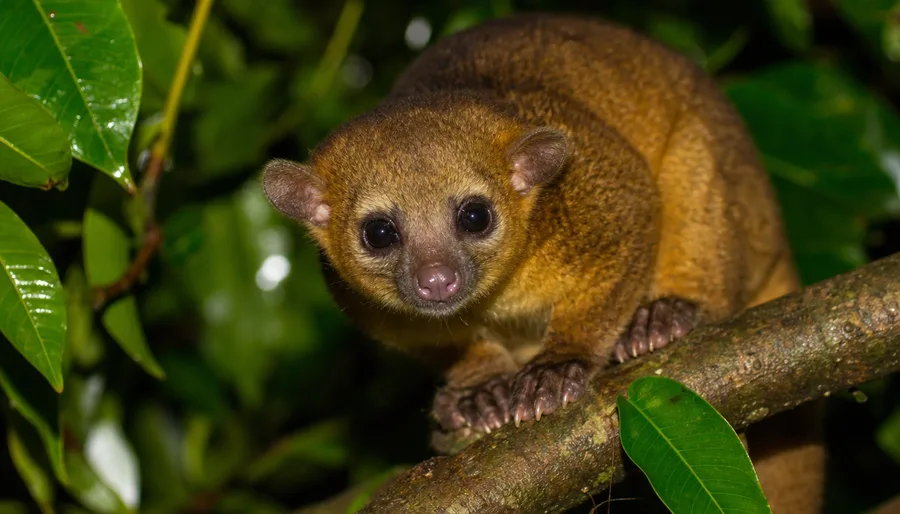
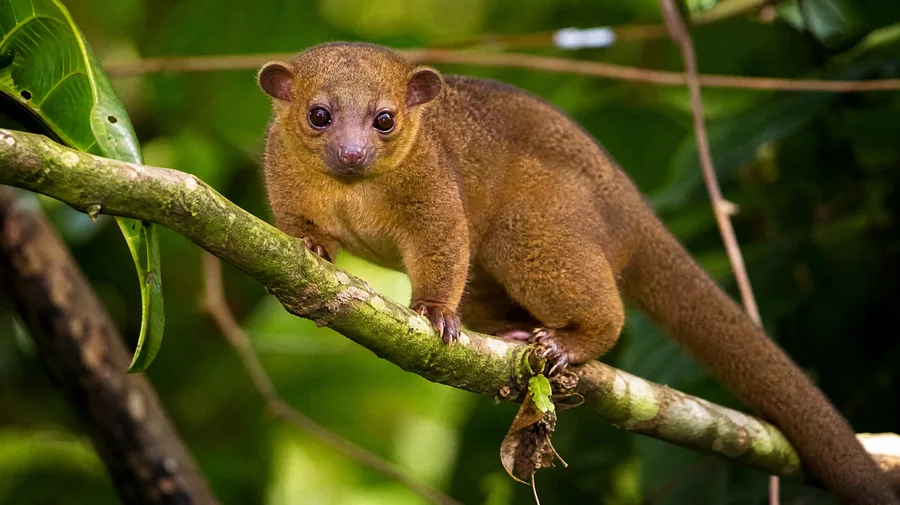
The namesake of the tour, the kinkajou, is an arboreal mammal related to the raccoon family. Locals call them micoleón, which translates to monkey-lion. They possess prehensile tails, golden-brown coats, and a voracious appetite for wild figs and balsa flower nectar. When you find one, it is usually hanging upside down from a branch high up, chewing on fruit and staring right back at you with huge, glassy eyes that reflect orange in the light. They move with an odd, deliberate slowness until they get spooked, at which point they scramble through the canopy at ridiculous speed.
Sloths are the other headliner. You are looking for the two-toed sloth here, which is strictly nocturnal, unlike its three-toed cousin. Seeing a sloth active at night is bizarre if you have only seen them asleep during the day. In the dark, they stretch their limbs, clamber methodically along vines, and munch fresh leaves. Looking to understand the difference between day and night species across the region? Checking our guide on Monteverde night tour animals gives a clearer picture of what wanders these mountains after dusk.
Look lower, too. Some of the most memorable finds sit three feet off the ground:
- Sleeping birds: Emerald toucanets, motmots, and hummingbirds tuck their heads beneath their wings, perching motionless on low twigs where predators struggle to reach them without vibrating the branch.
- Arachnids: Guides often scratch the entrance of small, silk-lined holes in the clay banks, coaxing out striped-leg tarantulas or hunting spiders the size of a saucer.
- Tree frogs: Red-eyed leaf frogs and masked tree frogs gather around small seasonal ponds or puddles, making noise that echoes through the underbrush.
- Vipers: The side-striped pit viper often drapes itself over broad leaves, completely still, waiting for an unwary frog to jump past.
Pro tip: Line your phone camera up with the eyepiece of your guide's spotting scope. It takes a steady hand and a bit of fiddling, but you will walk away with crisp, close-up shots of sleeping birds and climbing sloths that look like they came from a magazine.
Prices, Logistics, and Area Tour Comparisons
A standard ticket for this tour costs around $28 for adults, while children under twelve pay roughly $18. If you need transportation from your hotel or hostel in Santa Elena, operators typically charge an extra $5 to $7 round trip. Given the steep, unpaved gravel tracks branching off Route 606, letting their van bounce over the potholes instead of your rental car is usually money well spent.
Tours depart twice every evening. The first slot runs from 5:30 PM to 7:30 PM. The second departure runs from 7:30 PM to 9:30 PM. The early slot is consistently busier because families prefer it, but wildlife activity is often better on the later shift once the forest quietens down and the woods drop a couple of degrees in temperature.
Monteverde has dozens of evening excursions scattered across its valleys. Deciding between them depends on what kind of terrain you want to hike and how thick you prefer the forest around you. If you are debating between different reserves in the zone, read our breakdown of the best night tours in Monteverde to see how they stack up side by side.
| Tour / Reserve | Approx Adult Price | Tour Duration | Forest Type | Trail Difficulty |
|---|---|---|---|---|
| Kinkajou Night Walk | $28 | 2.0 hours | Secondary moist forest | Easy, mostly flat gravel |
| Monteverde Cloud Forest Reserve | $35 | 2.5 hours | Primary cloud forest | Moderate, incline and steps |
| El Refugio Wildlife Refuge | $27 | 2.0 hours | Mixed secondary forest | Easy, gentle dirt paths |
| Curicancha Reserve | $30 | 2.0 hours | Secondary transitional | Easy, well-cleared trails |
Reserving a spot ahead of time is wise between December and April, when the dry season brings busloads of visitors into Santa Elena. You do not necessarily need to book weeks out; dropping by a local tour desk twenty-four hours before is generally enough. If you want more details on securing passes and avoiding middleman markups, take a look at our overview on Monteverde night tour prices and booking tips.
Book your monteverde night tour experience:
Honreviews: What Travelers Love and What Bugs Them
Traveler feedback for the kinkajou night walk puntarenas province monteverde costa rica is largely positive, but it comes with a few predictable complaints that keep showing up in reviews. Knowing these ahead of time keeps your expectations grounded.
The praise almost always focuses on guide quality. Tico guides train heavily, carry expensive optical gear, and possess an absurd ability to spot a five-inch gecko clinging to the underside of a leaf thirty yards away while walking at normal speed. When a guide has genuine enthusiasm, the walk feels like an adventure with a local friend who knows where every weird bug lives.
The complaints almost always relate to crowd bunching. Because several groups head out along the same trail network at 5:45 PM, trails can feel congested during the first twenty minutes. When someone spots a kinkajou or a coati family, three different groups might converge on the same clearing. Suddenly, you have twenty-five people in rain ponchos whispering over each other, flashlights crisscrossing in the trees. It breaks the illusion of being deep in untamed nature.
Path maintenance, on the other hand, gets high marks. The trails are leveled, covered with gravel or wood chips, and wide enough that you rarely trip over roots. If you travel with young kids or older parents who cannot navigate steep boulder steps in the dark, this setup works in your favor.
Essential Preparation and Trail Etiquette
Monteverde sits between 4,000 and 5,000 feet above sea level. When the sun goes down, the heat of the Central Pacific plain drops off rapidly. Nights hover around 15°C to 17°C, often dropping lower when rain blows in from the Caribbean side. Dress in layers, because you will start cold, warm up after twenty minutes of walking, and cool down the moment your guide stops for ten minutes to scope a walking stick.
A few quick gear decisions make a massive difference to how much you enjoy the night:
- Footwear choices: Closed-toe shoes are mandatory. Leave the flip-flops and sandals at the hotel. Light hiking boots or standard running sneakers with decent grip work best on the gravel.
- Rain protection: Bring a lightweight rain shell or a durable poncho. Even if the sky looks clear at sunset, cloud forest weather can roll down the ridge and soak you in minutes.
- Bug management: Mosquitoes are less troublesome here than in coastal lowland towns like Manuel Antonio, but midges and biting ants are common. Spray your ankles before leaving your hotel room.
- Lighting etiquette: Use the flashlight provided or bring a small headlamp with a red-light mode. Never point your light directly into the eyes of other hikers or into bird nesting spots.
Keep your voice down. Animals in secondary forest reserves tolerate human foot traffic because they are used to evening tours, but sudden shouts or loud laughter will send a kinkajou bolting into the deep canopy within seconds.
Frequently Asked Questions about kinkajou night walk
What are the actual chances of seeing a kinkajou on the walk?
Sightings happen on roughly three out of five tours. Kinkajous move around based on which trees are flowering or fruiting, so their presence shifts from week to week. Even if kinkajous stay hidden, guides almost always find sloths, roosting birds, tarantulas, and frogs.
Is the trail difficult for people with limited mobility?
The route is relatively flat and laid with packed gravel, making it one of the easier night walks in the Monteverde area. It is not wheelchair accessible due to occasional steps and tree root ridges, but anyone capable of a slow two-hour stroll on level ground will manage easily.
Can children join the kinkajou night walk?
Yes, children of all ages can participate. Kids who enjoy bugs and flashlights love the experience, although children under five sometimes get tired or spooked by the pitch darkness after an hour on the trail.
What should I do if it pours rain?
Tours run rain or shine. In light drizzle, animals stay active. In a torrential downpour, canopy mammals like sloths and kinkajous tend to tuck under thick foliage to wait it out, meaning you will spot more amphibians and fewer mammals. Bring a reliable rain jacket.
Quick Reference
- Standard adult entrance: $28
- Departure schedules: 5:30 PM and 7:30 PM
- Duration: roughly 2 hours
- Trail length: 1.6 to 2 kilometers
- Best footwear: closed-toe running shoes or boots
Book your monteverde night tour experience:
Is It Worth It?
If you have never set foot in a tropical forest at night, the kinkajou night walk is easily worth the ticket price. Standing in the dark listening to strange canopy calls while a guide points out a sleepy toucanet resting two feet from your shoulder is an experience you simply cannot replicate during the day. Just go in knowing that it is a popular, shared experience rather than an isolated wilderness trek. Layer up, turn your phone flash off, and keep your gaze fixed high in the branches.
Read more about monteverde night tour.