Monteverde Night Walk: Routes, Guides and Booking
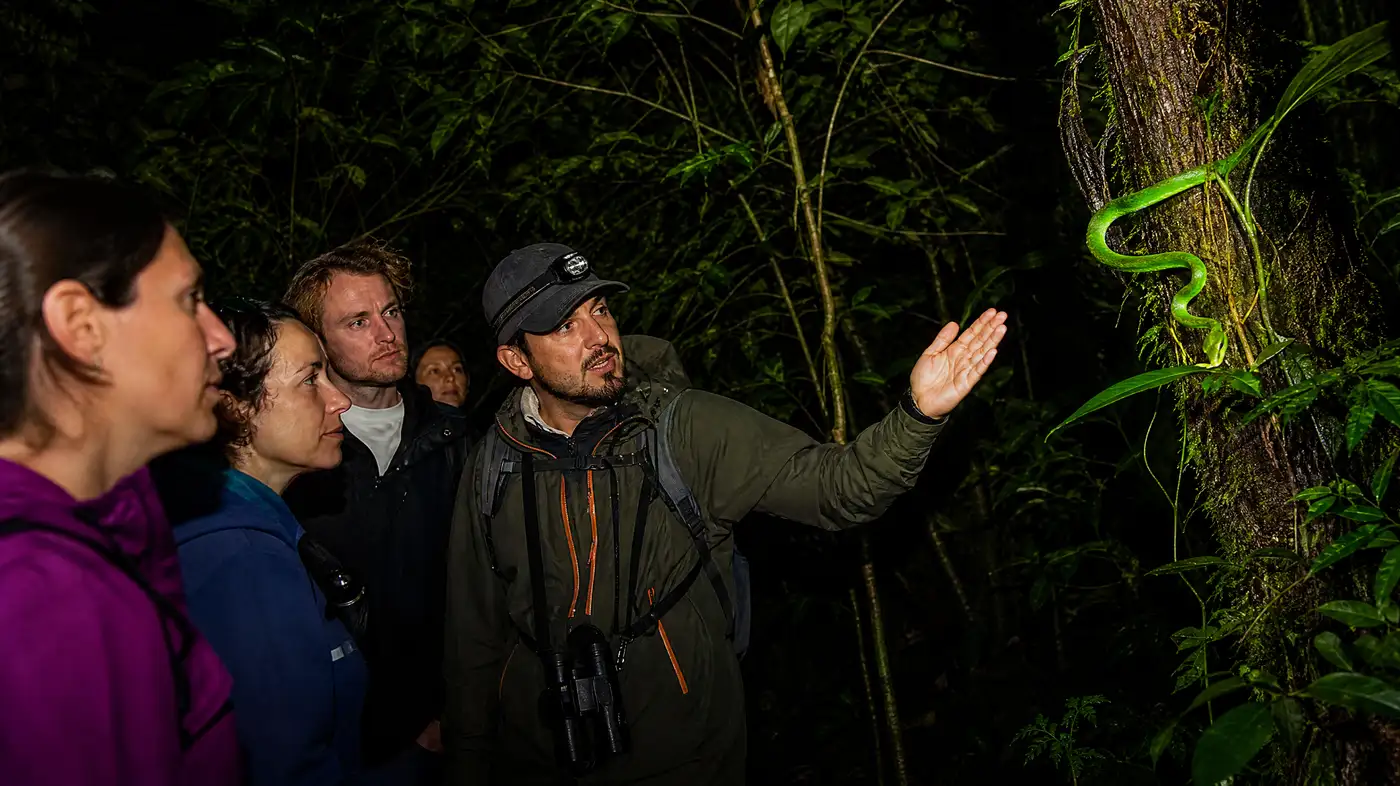
The trail goes pitch black the second you switch off your headlamp, and your ears take over before your eyes even adjust. You hear a drip falling seventy feet from a bromeliad, followed by a faint scratching against bark that turns out to be a two-toed sloth shifting its weight. Booking a night walk monteverde experience is easily one of the most rewarding things you can do in the Tilarán mountain range, yet the logistics trip people up constantly. Between dozens of private reserves, differing elevations, and guide qualifications, picking the right trail is rarely straightforward.
Most visitors assume there is just one cloud forest here. There are actually several distinct microclimates wrapped around the continental divide, and animals behave differently depending on which patch of trees you enter after sunset. Some reserves deliver density and constant frog calls. Others offer deep, quiet wilderness where you might walk forty minutes between sightings before spotting something rare like an emerald toucanet tucked asleep on a branch. Here is how the routes stack up, how guides operate, and how to book without paying hotel middleman markups.
Book your monteverde night tour experience:
Popular Routes and Trail Systems for a Night Walk Tour Monteverde
The routes split into two main ecological types: true primary cloud forest and secondary transitional forest. Primary cloud forest sits higher up, usually above 1,500 meters. It is wet, cold, and dripping wet almost every night of the year. The trails at the main Monteverde Cloud Forest Reserve fall into this category. The canopy is dense, which means sleeping birds sit high up out of reach, and mammals have thousands of hiding places. It feels mysterious and prehistoric, but you might walk away seeing fewer species than you hoped.
Lower down, between 1,200 and 1,400 meters, secondary forests like Curi-Cancha, El Refugio, and the private trails near Valle Escondido offer much better visibility. The trees are younger and shorter. Fruiting bushes grow right at eye level, which attracts sleeping birds, insects, and small mammals looking for food. If you check our breakdown of the best night tours in Monteverde, you will notice that reserves with mixed vegetation almost always produce higher wildlife counts on average nights.
Pro tip: If your priority is seeing sleeping birds like motmots and toucanets, pick a reserve with lower canopy trees around 1,300 meters rather than high-elevation ridge trails.
Trail conditions vary across these properties. Curi-Cancha features wide, graded gravel paths that stay relatively dry even during a November downpour. Kinkajou and El Refugio have narrower dirt tracks where tree roots cross the walkway, requiring steady footing and boots with decent tread. None of these walks involve steep mountain climbing, but you will be stepping over roots and muddy puddles in near-total darkness for roughly two hours.
Expect to walk very slowly. A standard two-hour tour rarely covers more than 1.5 kilometers. You take three steps, stop for five minutes while the guide scans the understory with a focused beam, and then shuffle forward again. It is a slow, quiet hunt, not a hike.
Route Comparison: What Each Reserve Actually Offers
Every reserve manager claims their forest has the most biodiversity. In reality, each property caters to a slightly different style of traveler, depending on group sizes and trail accessibility. When choosing your monteverde night walk costa rica route, balancing trail length against crowd density makes a massive difference to what you actually spot.
| Reserve | Elevation | Trail Condition | Typical Price | Group Cap |
|---|---|---|---|---|
| Curi-Cancha | 1,450 m | Wide gravel, very easy | $30 - $35 | 8 people |
| El Refugio | 1,300 m | Dirt paths, roots, moderate | $28 - $33 | 9 people |
| Kinkajou Night Walk | 1,250 m | Narrow earth, muddy after rain | $25 - $30 | 8 people |
| Monteverde Reserve | 1,600 m | Paved and gravel, wet | $35 - $40 | 12 people |
| Santuario Ecológico | 1,350 m | Natural trail, uneven | $27 - $32 | 8 people |
Curi-Cancha remains the gold standard for route maintenance and guide coordination. They space their groups out on staggered 15-minute intervals, meaning you rarely bump into another group's flashlight beams. El Refugio has denser undergrowth, which makes finding tarantulas and pit vipers more frequent, though the trails get slick when the evening mist rolls in hard.
The official Monteverde Reserve is worth visiting during the day for its hanging bridges and vast cloud cover, but for an evening nightwalk monteverde outing, smaller private reserves often deliver a more intimate experience. The big reserve limits night entries strictly, yet groups can still feel somewhat clustered along the main spine trail.
The Guide Factor: Independent vs. Reserve-Assigned Naturalists
You can walk into a reserve with a fantastic trail system, but if your guide has dull eyes or does not care, you will walk past sleeping side-striped palm pit vipers without ever noticing them. A good guide does not just point out wildlife; they hear a broken branch twenty yards out and recognize the cadence of an armadillo digging through leaf litter. The guides carry heavy high-powered spotting scopes mounted on tripods, aligning the lens with a sleeping trogon so you can photograph it through the glass using your phone.
You generally have two options when booking: accept the house guide assigned by the reserve at the ticket window, or hire an independent, certified ICT (Costa Rican Tourism Board) naturalist guide who books the reserve entrance for you. Independent guides often charge $15 to $20 more per person, but their groups are smaller, often just your family or four people maximum.
- Spotting equipment: check that your guide carries a dedicated 40x or 60x spotting scope, not just a flashlight.
- ICT certification: verified guides wear a laminated national naturalist badge showing official training in biology and first aid.
- Group cap policies: clarify if your booking joins an open pool or caps strictly at eight guests.
- Language fluency: confirm your guide speaks conversational English if your Spanish is rusty, as local wildlife names can get confusing.
On one walk last year, our guide stopped suddenly and aimed his light at what looked like dead leaf matter two feet from my elbow. It was an eyelash viper, bright yellow, coiled tight around a twig. I had looked right at that branch three times without spotting it. That is why you hire a certified naturalist. To make sure you bring the right clothing for these slow, damp hours, skim our advice on Monteverde night walk tips and gear before heading out.
Book your monteverde night tour experience:
How to Book Your Monteverde Costa Rica Tour Walk Night
Booking procedures depend heavily on the season. From late December through April, spots fill up days in advance. Walking into Santa Elena and hoping to book an evening tour for that same night usually leaves you with the least reputable operators or large, noisy groups of twenty people trailing behind a single guide.
Note: Some hotels add a 20% to 35% commission on top of the standard reserve fee if you book through the front desk. Booking directly with the reserve or the guide's personal WhatsApp avoids these markups.
Direct bookings are easiest through WhatsApp or reserve websites. Most independent guides operate their own businesses via direct messaging, which is standard practice across Costa Rica. They appreciate direct contact because third-party booking engines take steep cuts from their earnings.
- Select your target reserve: choose based on trail accessibility and your preferred elevation.
- Reserve 48 hours ahead: during dry months, message guides three to four days early to lock down the 5:30 PM slot.
- Choose your start time: early slots around 5:30 PM capture the transition from dusk to full dark, when animals change shifts.
- Confirm transport inclusions: check whether pickup from your Santa Elena or Cerro Plano lodging is covered in the quoted rate.
- Prepare cash for tipping: park entry can be paid by credit card, but guides appreciate direct cash tips around $5 to $10 per person.
Do not be afraid to switch dates if an operator tells you their early group is already packed to the limit. A group of eight people is the sweet spot. Once a group swells to ten or twelve, people at the back spend half the tour waiting for their turn at the scope, by which point the owl or frog has often jumped away into the dark.
What to Expect on the Trail
Most evening walks begin right around 5:30 or 6:00 PM. Dusk falls fast in the tropics; within twenty minutes, twilight disappears and the forest goes completely black. The temperature drops noticeably as well. Even if Santa Elena felt warm during lunch, the tree canopy traps humidity and wind, pulling temperatures down to around 14 or 15 degrees Celsius. A light thermal layer and a rain jacket are essential.
You will be handed a small LED flashlight at the entrance gate. Keep the beam aimed low at the path immediately in front of you. Sweeping lights around at head height blinds the other travelers and scares away sensitive animals. Guides use specialized green or soft white lights to illuminate creatures without hurting their eyes, especially sleeping birds whose nocturnal vision is fragile.
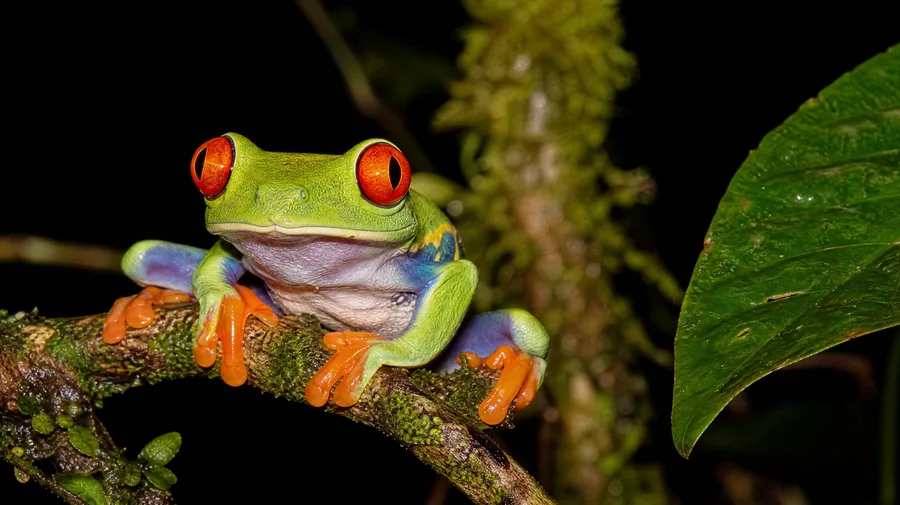
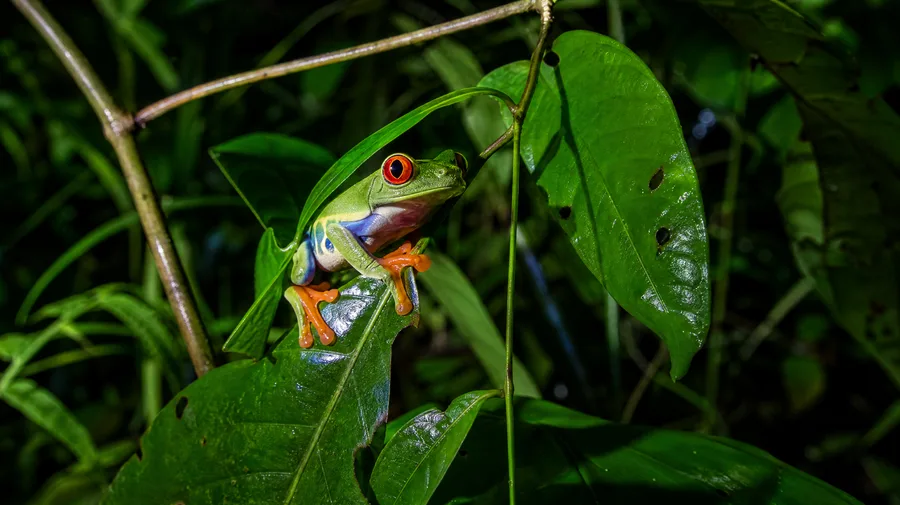
Patience is the currency of any monteverde costa rica tour walk night. There will be ten-minute stretches where you see nothing but wet leaves and mossy trunks. Then, within sixty seconds, you will watch a red-eyed tree frog lay eggs on the underside of a leaf, a tarantula emerge from a burrow in a clay bank, and a kinkajou scramble through the branches above. It requires quiet focus. Whispering on trail helps keep wildlife from retreating deeper into the canopy.
Mist and rain are part of the ecosystem here. If it starts drizzling, do not cancel your walk. Frogs love wet weather, and damp conditions bring out snails, insects, and the predators that hunt them. Only severe wind or heavy lightning storms will shut down trail operations for safety reasons.
Frequently Asked Questions about night walk monteverde
What is the best time slot for a night tour?
The 5:30 PM departure is best because you catch the transition from twilight to full darkness. Diurnal birds are tucking themselves into branches to sleep while nocturnal mammals and amphibians are just starting their nightly foraging.
Can children handle these evening walks?
Yes, children over six usually love them, provided they can walk quietly on uneven trails for two hours. Strollers will not work on these dirt paths, so younger children must be carried in a baby carrier.
Is it possible to do a night walk without a guide?
No, virtually all reserves in the Monteverde region prohibit unaccompanied night visits for safety reasons and wildlife protection. You must be accompanied by a licensed naturalist guide to enter after dark.
What happens if it rains during the tour?
Tours run rain or shine. In fact, light rain often increases amphibian activity, bringing out more tree frogs and toads. Guides adjust routes to stay sheltered under denser canopy where possible.
Quick Reference
- Tour duration: roughly 2 hours (1.5 km walked)
- Average ticket price: $25 to $38 per adult
- Best departure time: 5:30 PM dusk slot
- Footwear required: closed-toe shoes or trail runners
- Group size limit: ideal at 6 to 8 people
Book your monteverde night tour experience:
Before You Go
The cloud forest looks entirely different once the sun drops behind the Pacific hills. Taking a nightwalk monteverde tour offers a rare window into animal behaviors you will never witness during sunny daytime hikes, from sleeping hummingbirds puffed up into tiny balls to glowing click beetles navigating the moss. Book directly with a dedicated guide, bring a reliable rain shell, keep your voice to a low whisper on the path, and give your eyes time to adjust to the shadowed branches above.
Read more about monteverde night tour.